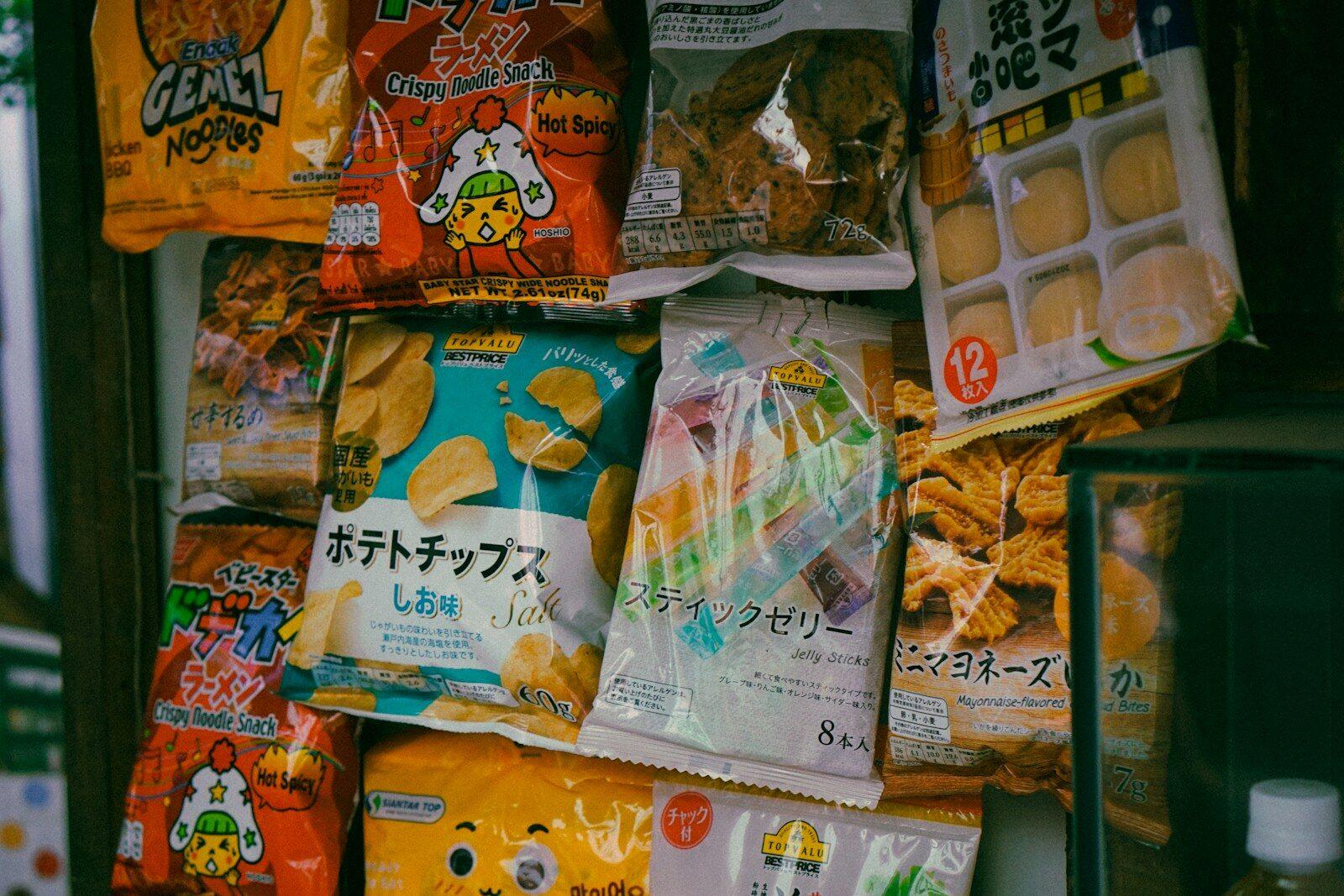
The Japanese ingredients to avoid for halal come down to two short lists: pork words, led by 豚 (buta) and ラード (lard), and alcohol words, led by 酒 (sake, any alcohol), 酒精 (ethanol) and みりん (mirin). Learn those, plus a handful of check words like ゼラチン (gelatin) and 乳化剤 (emulsifier), and you can read most konbini and souvenir labels in about 30 seconds.
This is our working list, the same one we use in shops. It gives you the facts on each word. Where scholars and families differ, for example on trace alcohol or non-certified beef, we say so and leave the decision to you.
Checked November 2026
At a glance
- Where to look: the 原材料名 (genzairyō-mei) box on the back of the pack.
- Pork words: 豚, 豚肉, ポーク, ラード, 豚脂, ベーコン, とんこつ.
- Alcohol words: 酒, 酒精, みりん, 料理酒, 洋酒, 粉末酒, ワイン, ラム.
- Check words: ゼラチン, 乳化剤, ショートニング, エキス, 牛脂, 発酵調味料.
- Good signs: a halal mark with a named certifier, 植物油脂, 乳化剤(大豆由来).
- Big catch: pork and gelatin are only voluntary allergen items in Japan, so no 豚肉 in the allergen bracket isn’t proof of no pork.
How do you read a Japanese food label?
Every packaged food in Japan has a box titled 原材料名 (ingredients). Ingredients come first, in order of weight. Then a slash (/) or a new line, and the additives. At the end there’s often a bracket that starts with 一部に (“contains in part”) and lists allergens.
Here’s the catch. Japan’s Consumer Affairs Agency makes 9 allergens mandatory, including wheat, egg, milk, shrimp and, from April 2026, cashew. Pork (豚肉), beef (牛肉), chicken (鶏肉) and gelatin (ゼラチン) are on a separate list of 20 recommended items that companies may label but don’t have to. So the allergen bracket is a helpful hint, never a halal check. Read the whole ingredient list every time.
Chain websites are no shortcut either. 7-Eleven Japan’s product pages, for example, show only the mandatory allergens, not full ingredients. The pack in your hand is the real label.
Japanese ingredients to avoid for halal: the pork words
| Japanese | Reading | Meaning |
|---|---|---|
| 豚 / 豚肉 | buta / butaniku | pork. Look for the 豚 character anywhere in a word |
| ポーク | pōku | pork, as in ポークエキス (pork extract) |
| ラード / 豚脂 | rādo / tonshi | lard, pork fat |
| とんこつ / 豚骨 | tonkotsu | pork bone, as in ramen broth |
| ベーコン, ハム, ソーセージ, ウインナー | bēkon, hamu, sōsēji, uinnā | bacon, ham, sausage. Usually pork in Japan unless the pack says chicken (チキン) or beef |
| チャーシュー / 焼豚 | chāshū / yakibuta | roast pork, as in ramen topping |
| 豚肉エキス / ポークエキス | butaniku ekisu / pōku ekisu | pork extract, often hidden in soup bases and snacks |
Pork turns up in places you wouldn’t expect: instant noodle soup powders, gyoza, curry roux, some crackers and many souvenir snacks. Our Ichiran guide shows a real example, where the souvenir ramen pack lists 豚肉.
Which Japanese label words mean alcohol?
| Japanese | Reading | Meaning |
|---|---|---|
| 酒 / 日本酒 | sake / nihonshu | alcohol in general / Japanese rice wine |
| 酒精 | shusei | ethanol, ethyl alcohol, often used as a preservative |
| みりん / 本みりん | mirin / hon-mirin | sweet rice seasoning; hon-mirin is about 13 to 14% alcohol |
| みりん風調味料 | mirin-fū chōmiryō | mirin-style seasoning, under 1% alcohol |
| 料理酒 | ryōri-shu | cooking sake |
| 洋酒 | yōshu | Western liquor, common in cakes and chocolates |
| 粉末酒 | funmatsu-shu | powdered alcohol, used in flavored sweets |
| ワイン, ラム酒, ブランデー, 梅酒 | wain, ramu-shu, burandē, umeshu | wine, rum, brandy, plum liqueur |
A real example: Nestlé Japan’s umeshu KitKat lists 粉末酒(梅酒、デキストリン) (powdered alcohol: plum liqueur, dextrin), and its Masuizumi sake KitKat lists 粉末酒(清酒、デキストリン).
JNTO also notes that some miso contains alcohol unless it’s additive-free and labeled 無添加 (mutenka), and that cooking sake and mirin are used in many Japanese dishes. Mirin-style seasoning and 酒精 used as a preservative are the two areas where schools of thought differ most, so decide your family’s rule before you shop.
What are the check words?
These words don’t tell you the source on their own. They’re the ones to research, ask about or skip, depending on your family’s approach.
- ゼラチン (zerachin), gelatin: mainly made from cattle bone and hide or pig skin, sometimes fish. Japanese labels rarely say which. Common in gummies, yogurts, marshmallows and desserts.
- 乳化剤 (nyūkazai), emulsifier: can be plant-based (soy or egg lecithin) or come from animal fats. 乳化剤(大豆由来) means soy-derived, which is a good sign.
- ショートニング (shōtoningu), shortening: mostly plant oil today, but it started as a lard substitute and isn’t always labeled by source.
- エキス (ekisu), extract: チキンエキス, ビーフエキス or 豚肉エキス. Chicken and beef extracts come from non-halal-slaughtered animals unless certified.
- 牛脂 (gyūshi), beef tallow, and 牛肉 (gyūniku), beef: not pork, but not halal-slaughtered unless certified. McDonald’s Japan, for one, says its frying oil blends beef tallow and palm oil.
- 動物油脂 (dōbutsu yushi), animal fat: could be any animal, pork included.
- 発酵調味料 (hakkō chōmiryō), fermented seasoning: can contain alcohol. Ask, or treat it as a question mark.
- コラーゲン (korāgen), collagen: often from pork or fish.
What are the good signs on a Japanese label?
- A halal mark with a named certifier. Japan has no single government halal agency, so look for a certifier’s name, such as Japan Halal Foundation, Japan Muslim Association or NAHA, not just the word ハラール (halal).
- 植物油脂 (shokubutsu yushi), vegetable oil, instead of animal fat.
- 乳化剤(大豆由来), soy-derived emulsifier.
- A short, plain list. Plain onigiri like 梅 (pickled plum), 昆布 (kelp) or 鮭 (salmon) often have simpler labels, though you still need to read for 酒精, みりん and エキス.
- ヴィーガン (vegan) or プラントベース (plant-based): no animal ingredients, which settles the meat and gelatin questions. Vegan doesn’t mean alcohol-free, so still read the list.
For a deeper walk through onigiri, sandwiches and snacks at 7-Eleven, FamilyMart and Lawson, see our halal konbini guide.
Halal Japan Food Survival Kit
Want this list in your pocket? Our printable kit has a one-page label decoder with every word above, plus 8 phrase cards in polite Japanese, including “I can’t eat pork or alcohol” and a kids’ allergy card. Print it or keep it on your phone. Get the kit on Etsy.
What should a halal card for Japan say?
A halal card is a short note in Japanese you show at a restaurant counter. Keep it polite and specific. These lines cover most situations:
| Japanese | English |
|---|---|
| 私はイスラム教徒です。 | I’m Muslim. |
| 豚肉や、ラード・ポークエキスなど豚由来のものは食べられません。 | I can’t eat pork or anything from pigs, such as lard or pork extract. |
| お酒、みりん、料理酒も使わないでいただけますか。 | Could you please not use alcohol, mirin or cooking sake? |
| この料理に、これらは入っていますか? | Are any of these in this dish? |
| ハラール認証はありますか? | Do you have halal certification? |
Staff will often check with the kitchen and come back with a clear answer. If they’re unsure, that’s useful information too. Free tools like tabemasen.io can make a printable Japanese card for your diet and allergies.
A 30-second label check, step by step
- Find 原材料名 on the back of the pack.
- Scan for 豚 and ポーク, then ラード and エキス.
- Scan for 酒, which catches 酒精, 洋酒, 料理酒, 日本酒 and 粉末酒, then みりん.
- Check the question words: ゼラチン, 乳化剤, ショートニング, 動物油脂.
- Look for a halal mark and certifier, and decide using your family’s rule.
With kids, we make it a game: whoever spots 豚 first gets to pick the next snack. By day three, children often read labels faster than their parents.
Questions people ask
What Japanese ingredients should Muslims avoid?
The clear pork words are 豚, 豚肉, ポーク, ラード, 豚脂 and とんこつ. The alcohol words are 酒, 酒精, みりん, 料理酒, 洋酒 and 粉末酒. Gelatin (ゼラチン), emulsifier (乳化剤), shortening and extracts (エキス) need checking, because their source isn’t always stated.
Does the Japanese allergen list always show pork?
No. Pork, beef, chicken and gelatin are only recommended allergen items in Japan, not mandatory ones, so a missing 豚肉 in the allergen bracket doesn’t prove a product has no pork. Read the full ingredient list.
What does 酒精 mean on a Japanese label?
酒精 (shusei) means ethanol, ethyl alcohol. It’s often added as a preservative in onigiri, noodles and sweets. Views differ on small amounts of added alcohol, so decide your own rule.
Is mirin halal?
Hon-mirin is about 13 to 14% alcohol, and mirin-style seasoning (みりん風調味料) is under 1%. Scholars differ on low-alcohol seasonings, so we give the facts and leave the ruling to you.
What should a halal card for Japan say?
Say you’re Muslim, that you can’t eat pork, lard or pork extract, and ask that no alcohol, mirin or cooking sake be used. Asking whether the restaurant has halal certification is also useful.
Get one new label word, a halal find and a family tip every Thursday in our free weekly newsletter. Subscribe to Japan Explorers on Substack.